The Finishing of Original Colt Revolver Grips: 1836-1873
The Finishing of Original Colt Revolver Grips from 1836 to 1873
Introduction
The finishing methods employed on original Colt percussion and early cartridge revolvers represent an important but often overlooked aspect of 19th-century firearms manufacturing. From Samuel Colt's first Patent Arms Manufacturing Company in Paterson, New Jersey through the adoption of the Single Action Army in 1873, the treatment of wooden grip panels evolved alongside manufacturing techniques and market demands. This article examines the materials, methods, and distinctions in grip finishing practices during this formative period of American firearms production.
Wood Selection and Preparation
Early Paterson Period (1836-1842)
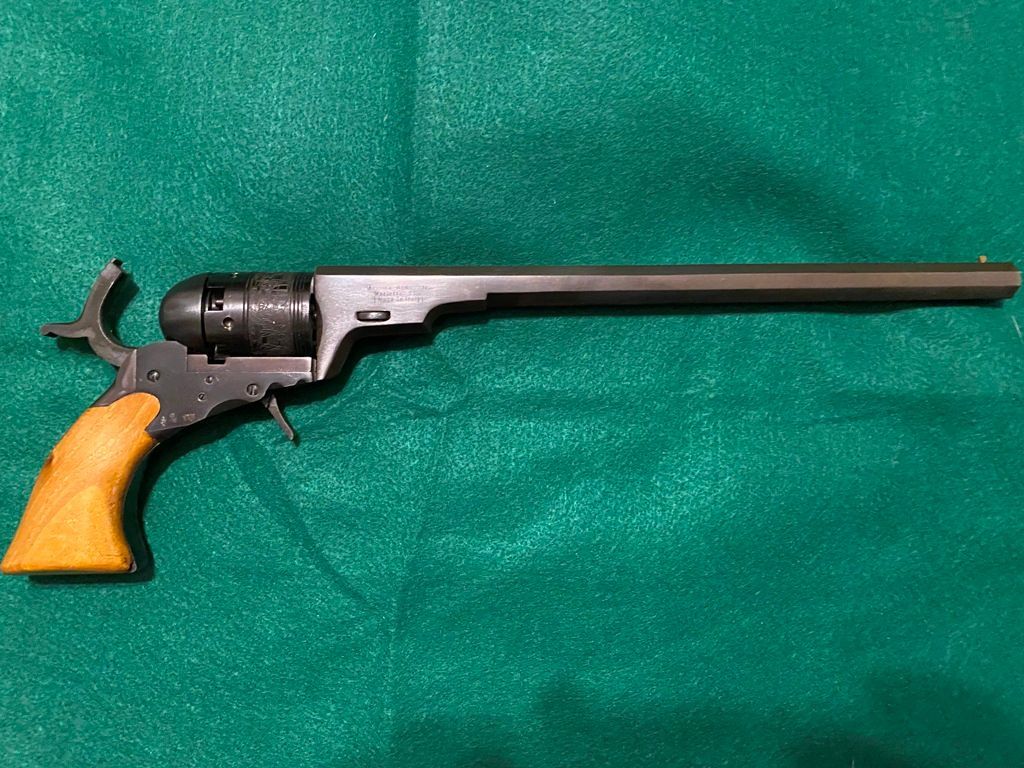
The earliest Colt Paterson revolvers featured one-piece wooden grips with a distinctive flared or "bell-shaped" profile. [^1] These grips were crafted from American black walnut (Juglans nigra), a domestic hardwood that was readily available and well-suited to the demands of firearms manufacturing.[^2] The Paterson grips were notable for their ergonomically challenging design, which would be refined in subsequent models.
The wood used in this early period was air-dried to appropriate moisture content, following traditional practices that predated industrial kiln-drying methods. American black walnut possessed desirable characteristics including moderate density, workability, and natural resistance to splitting under recoil forces.[^3]
Hartford Era Woods (1847-1873)
Following Colt's relocation to Hartford, Connecticut and the establishment of his factory on the banks of the Connecticut River in the 1850s, the company continued to utilize American black walnut as the primary grip material.[^4] By the 1860s, Colt had developed sophisticated manufacturing processes under the direction of engineer Elisha K. Root, including standardized patterns and gauges that allowed for interchangeable parts—a revolutionary concept at the time. [^5]
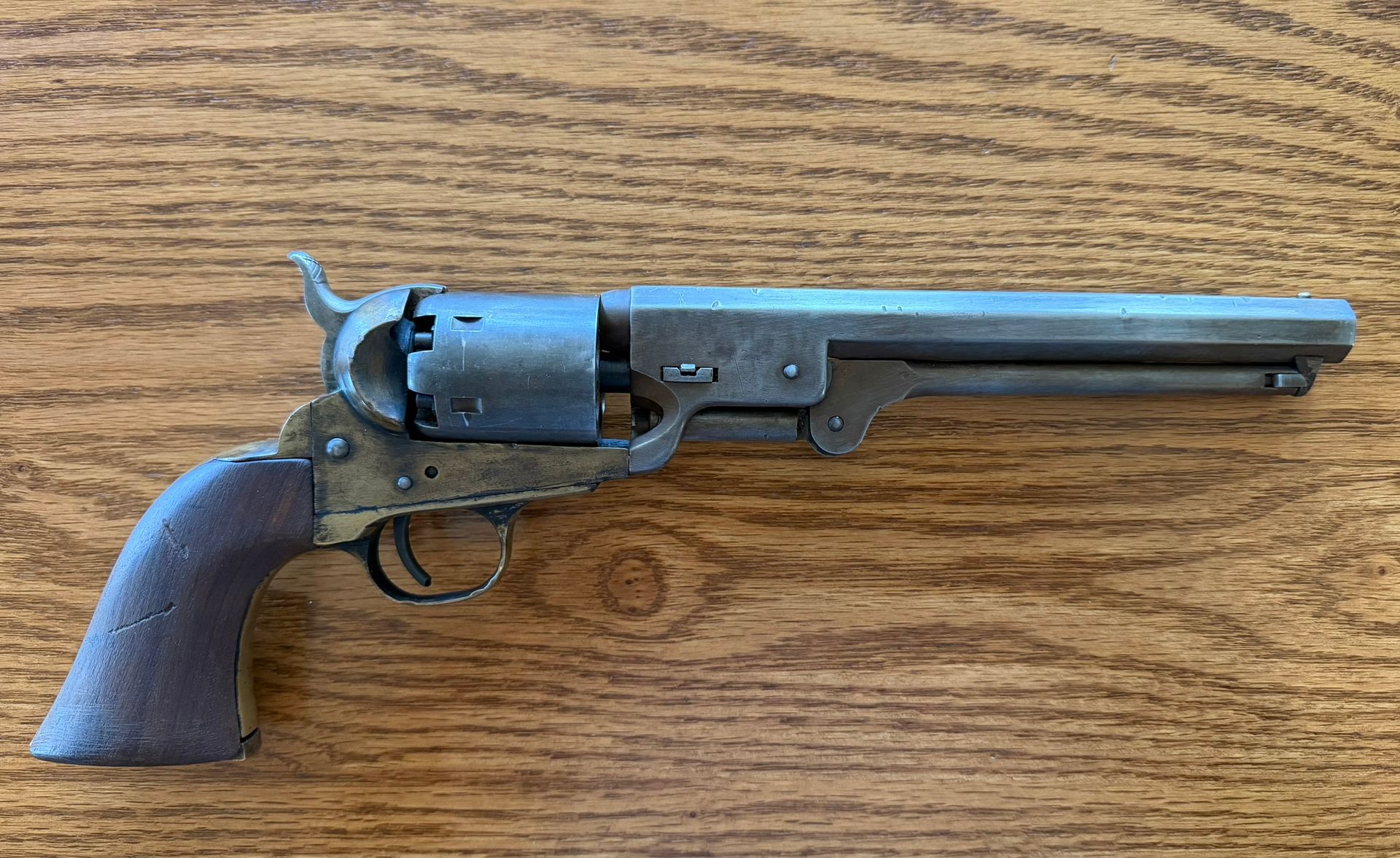
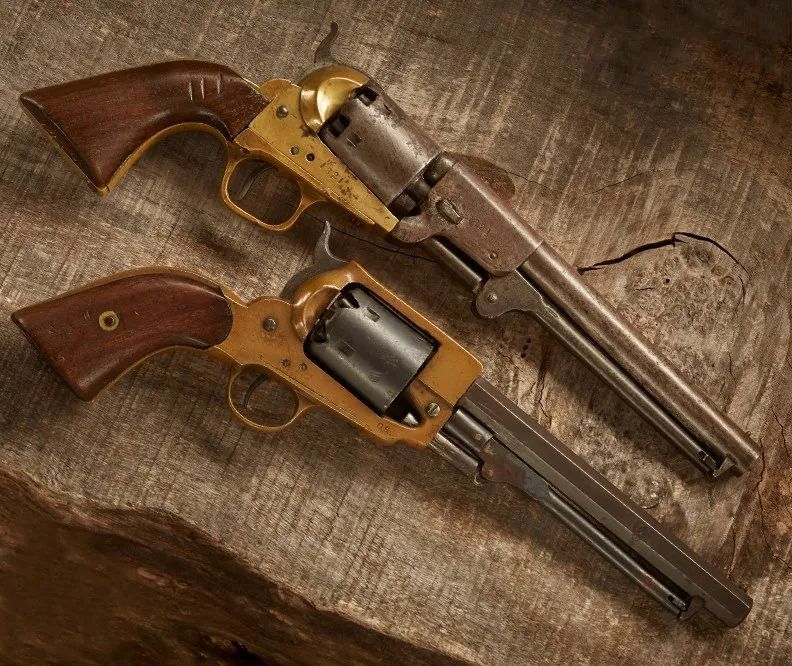
The one-piece walnut grips fitted to the Walker (1847), Dragoon series (1848-1860), Navy Model 1851, Army Model 1860, and Navy Model 1861 all shared similar wood selection criteria.[^6] The wood was selected for relatively straight grain and freedom from defects, though it lacked the highly figured characteristics often seen in fine sporting arms of the period. Military contract revolvers in particular featured plain, serviceable walnut suitable for mass production.
Finishing Methods and Materials
The Question of Oil versus Varnish
The finishing of Colt revolver grips during the percussion era has been a subject of considerable discussion among collectors and historians. The evidence suggests that Colt employed different finishing methods depending on whether firearms were destined for military or civilian markets, though the distinction was not absolute.
Military Contracts: Oil Finish
Revolvers produced under military contract, including the vast majority of the approximately 129,730 Model 1860 Army revolvers purchased by the U.S. Government during and after the Civil War, featured grips finished with boiled linseed oil.[^7] This finish was applied in multiple thin coats, with each coat hand-rubbed into the wood and allowed to cure before the next application.[^8]
The oil finishing process, while time-consuming, offered several advantages for military use:
1. Simplicity of application: Linseed oil could be applied without specialized equipment
2. Repairability: Field damage could be touched up with readily available materials
3. Durability in service: The oil penetrated deeply into the wood grain, providing protection from within rather than forming a surface film
4. Cost effectiveness: Boiled linseed oil was inexpensive and readily available
The "boiled" linseed oil used in this period was actually raw linseed oil that had been heated to high temperatures (approximately 270°C) for several hours, causing partial polymerization and the addition of metallic driers to accelerate curing.[^9] This created an oil that would dry more completely than raw linseed oil, though it still cured to a relatively soft finish compared to true varnishes.
The resulting appearance was a low-luster, semi-matte surface that darkened the walnut slightly and enhanced the grain pattern without creating a glossy surface.[^10] Military-inspected grips often bore cartouche marks stamped into the wood before finishing, and these marks remained clearly visible through the thin oil finish.[^11]
Civilian Market: Varnish Finish
For revolvers sold on the civilian market, Colt employed what period sources describe as a "varnished" finish, though this term requires careful interpretation within the context of 19th-century finishing practices.[^12] The varnishes used were not the quick-drying spirit varnishes (shellac-based) that would become common later, but rather what were known as "long-oil varnishes" or "fat varnishes."
These varnishes were composed of:
1. Linseed oil base: The predominant component, often comprising 60-70% of the mixture
2. Natural resins: Including materials such as copal, rosin, or mastic
3. Turpentine: Used as a thinner and to improve flow characteristics
4. Drying agents: Metallic compounds to accelerate curing
The manufacturing process involved heating linseed oil to very high temperatures and then dissolving pulverized resins into the hot oil, creating a chemical combination rather than a simple mixture.[^13] This process produced a finish that was more durable than pure linseed oil while retaining much of oil's desirable handling characteristics and deep penetration into the wood.
Period finishing manuals and gunmaking texts from the 18th and 19th centuries describe numerous formulations for oil varnishes, many of which would have been suitable for firearms finishing.[^14]
A representative formula from the mid-19th century might call for:
• 1 pound of boiled linseed oil, heated until it would scorch a feather
• 2-3 ounces of powdered resin (sandarac, copal, or rosin)
• Turpentine to thin to working consistency
• Small amounts of metallic driers
The resulting varnish was applied in thin coats, with each coat allowed to dry thoroughly (often several days) before the next application.[^15] Between coats, the surface might be lightly rubbed with fine abrasives to level the finish and fill the wood grain. This technique, sometimes called "French polishing" when done with shellac, created a lustrous semi-gloss appearance that was more refined than the military oil finish.
Contemporary accounts suggest that civilian Colt revolvers typically received 3-5 coats of varnish, resulting in a finish that was notably glossy when new but would develop a rich patina with use.[^16] One period source specifically mentions that varnished grips on Colt revolvers had a reddish-amber cast, which was characteristic of linseed oil-based varnishes that had been lightly tinted with red pigments to enhance the natural color of the walnut.[^17]
Regional Variations: The London-Made Colts
Between 1853 and 1857, Colt established a factory in London, England, primarily to serve European markets and avoid British import restrictions.[^18] The London-made revolvers, particularly the Model 1851 Navy, featured distinctive characteristics that extended to their grip finishing.
London-made Colts received what was known in British gunmaking circles as the "London Finish"—a labor-intensive process involving many coats of boiled linseed oil, each one forcefully hand-rubbed into the wood over a period of weeks or months.[^19] This finish was highly regarded among European gunmakers and was standard on fine British sporting guns produced by makers such as Purdey, Holland & Holland, and others.
The London finish differed from both the Hartford military oil finish and the civilian varnish finish in its emphasis on extended curing time and the physical working of each coat into the wood through vigorous hand-rubbing, which generated heat and helped the oil penetrate more deeply.[^20] The result was an extremely durable finish with a soft, hand-polished sheen rather than a glossy surface film.
Application Techniques
Grip Fitting and Pre-Finish Preparation
Colt's manufacturing process called for grips to be fitted to the revolver frame before any finishing operations were performed.[^21] The grips were shaped, inletted for proper fit around the grip frame and backstrap, and final-sanded before being removed for finishing. This ensured a precise fit between the metal and wood components.
The pre-finish preparation involved:
1. Scraping and rough sanding: Initial shaping with files, scrapers, and coarse abrasives
2. Progressive sanding: Working through successively finer grits, typically ending around 220-320 grit equivalent using period abrasive papers or powdered stones
3. Grain raising: Dampening the wood with water or dilute alcohol solutions, allowing it to dry, and then sanding off the raised grain fibers—a process repeated 2-3 times[^22]
4. Final smoothing: Using very fine abrasives or simply burnishing with hardwood blocks or horn
Oil Finish Application Process
For military contract revolvers, the oil finishing process followed these general steps:
1. First coat: Liberal application of boiled linseed oil to all surfaces, allowing the wood to absorb as much as possible for 10-15 minutes
2. Wiping: Removal of all excess surface oil with clean rags, leaving only what had penetrated the wood
3. Curing: Allowing 3-5 days for the oil to polymerize and harden
4. Additional coats: Repeating the process 3-6 times until the wood would accept no more oil
5. Final polishing: After complete curing (often 2-4 weeks), the surface could be buffed with fine abrasives or simply burnished with bare hands to create a subtle sheen
The resulting finish penetrated deeply but built very little surface film, leaving the wood's natural texture largely unchanged.[^23]
Varnish Finish Application Process
The varnish finishing process for civilian revolvers was more complex:
1. Sealer coat: A thinned mixture of varnish (50% varnish, 50% turpentine) applied liberally and allowed to penetrate
2. Grain filling: Application of full-strength varnish, sometimes mixed with fine pumice or rottenstone to fill the wood's pores, then wiped clean across the grain
3. Build coats: 2-4 coats of full-strength varnish, each allowed to cure 3-5 days
4. Leveling: Light sanding between coats with very fine abrasives to remove dust nibs and level the surface
5. Final coat: A carefully applied thin coat of varnish, allowed to flow out and self-level
6. Rubbing out: After full curing (2-4 weeks), the surface could be rubbed with fine abrasives (pumice, rottenstone) and oil, then polished to the desired sheen
This process could take several weeks to complete and resulted in a notably more refined appearance than the oil finish. [^24]
Color and Staining Practices
Most Colt grips received minimal or no staining prior to finishing, relying on the natural color of the walnut and the slight darkening effect of the oil or varnish itself.[^25] When stains were used, they consisted of earth pigments or natural dyes dissolved in alcohol or oil, applied very sparingly to even out color variations in the wood.
Some evidence suggests that red or reddish-brown pigments were occasionally added to varnish mixtures for civilian revolvers, giving them a warmer, more amber-toned appearance.[^26] This practice was more common in fine furniture finishing of the period and may have been reserved for higher-grade or specially-ordered revolvers.
The Single Action Army Era (1873)
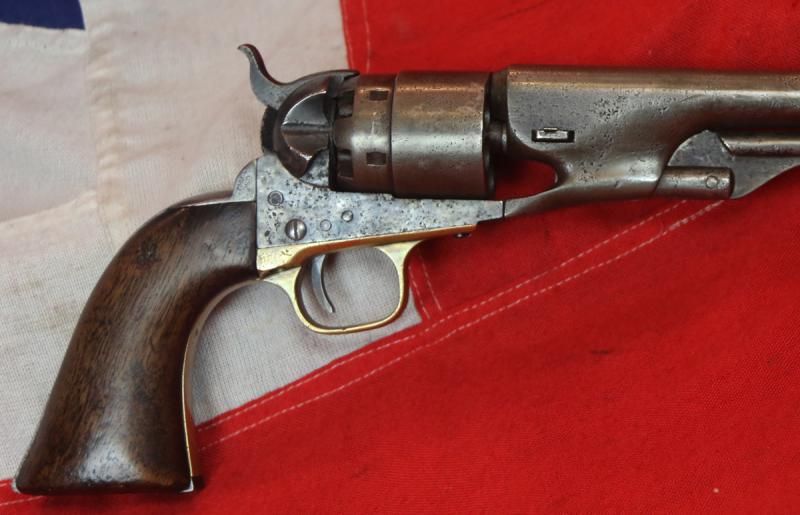
With the introduction of the Colt Single Action Army in 1873, grip finishing practices continued largely unchanged from the late percussion era.[^27] Military-contract SAA revolvers received oil-finished one-piece walnut grips similar to their Model 1860 Army predecessors, while civilian models could be ordered with varnished grips or, for additional cost, more exotic materials such as ivory or pearl.[^28]
The standard military SAA featured:
• Case-hardened frame, hammer, and loading gate
• Blued barrel, cylinder, and ejector housing
• Brass trigger guard and backstrap (often nickel-plated)
• One-piece smooth walnut grip with oil finish[^29]
Civilian variants offered more options, including fully nickel-plated examples that typically featured varnished or polished grips to complement the bright metal finish.[^30]
Maintenance and Patina Development
Both oil and varnish finishes on original Colt revolvers were intended to be maintained through periodic application of protective materials. Military manuals and civilian shooting guides of the period recommended occasional treatment with oils, waxes, or both.[^31]
A common maintenance mixture consisted of:
• 1 part boiled linseed oil
• 1 part beeswax
• 1 part turpentine (as a solvent)
This mixture would be warmed, applied sparingly to the grips, and buffed to a soft sheen.[^32] Such maintenance helped preserve the finish and replace oils lost through handling.
Over time, well-used original Colt grips developed a distinctive patina—a combination of oxidized finish, accumulated oils from hands, compressed surface fibers from handling, and subtle color changes from light exposure. This patina is now highly valued by collectors as evidence of honest wear and authentic originality.[^33]
Differences Between Original and Modern Reproductions
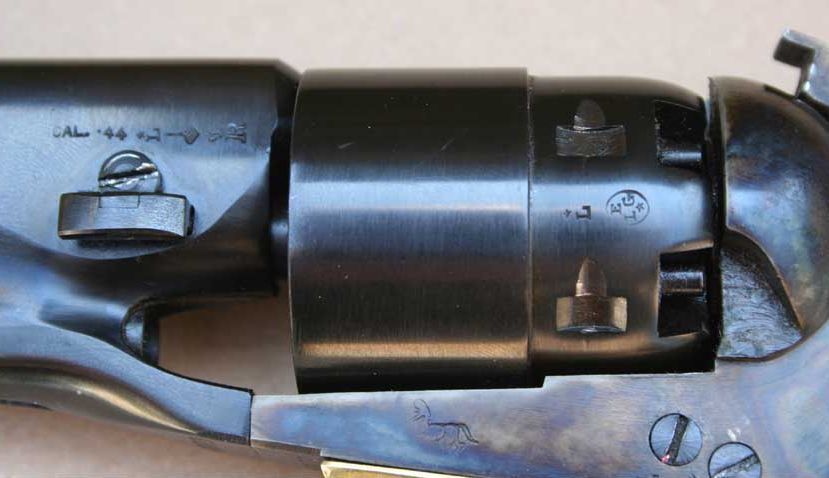
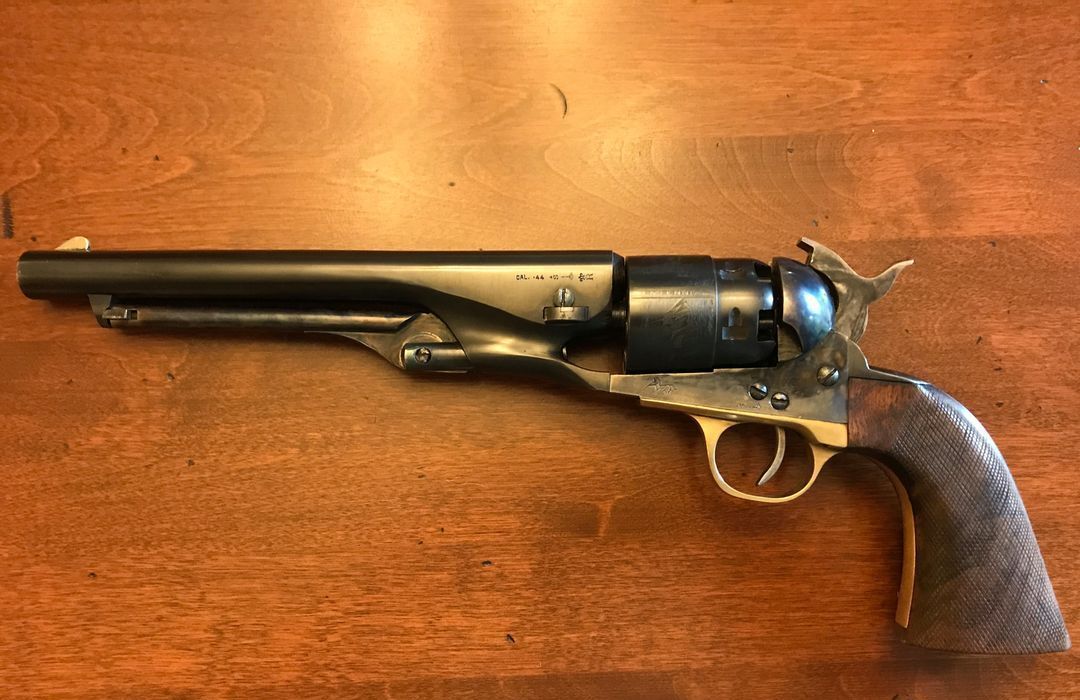
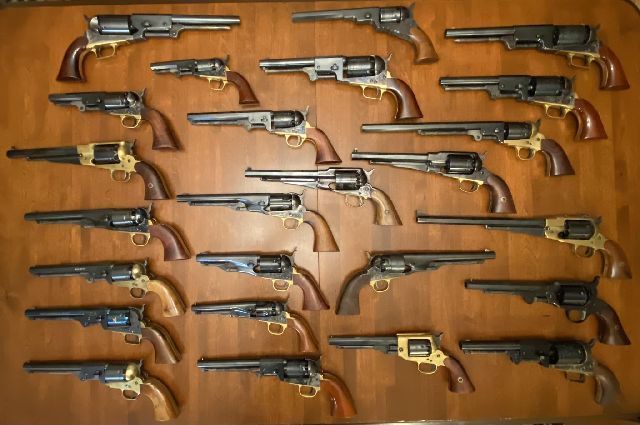
Modern Italian-made reproductions of Colt percussion revolvers, while mechanically quite faithful, typically feature grips finished quite differently from originals. The most notable difference is the bright red or orange tinted, high-gloss finish commonly applied to replica grips.[^34] This finish, which uses modern polyurethane or catalyzed lacquers often over European walnut rather than American black walnut, creates an appearance that would have been impossible with period materials and techniques.
Ironically, despite being derided by many collectors as inauthentic, the color of modern Italian replica grips is actually closer to some original varnished Colt grips than many realize—the difference lies primarily in the excessive gloss rather than the color itself.[^35] Original varnished grips would have had a similar reddish-amber cast but with a much more subtle, hand-rubbed sheen rather than the mirror-like gloss of modern finishes.
Conclusion
The finishing of Colt revolver grips from 1836 to 1873 reflected both the practical demands of firearms manufacturing and the aesthetic preferences of the period. Military contract arms received straightforward, durable oil finishes that prioritized function and ease of maintenance. Civilian market revolvers often featured more refined varnish finishes that enhanced the appearance of the walnut while still providing adequate protection.
Understanding these historical finishing practices provides valuable insight into 19th-century manufacturing methods and helps collectors and restorers make informed decisions about the treatment of antique firearms. The distinction between oil and varnish finishes, while sometimes blurred by the "long-oil varnish" formulations that combined characteristics of both, represents an important aspect of original Colt revolver configuration that deserves recognition alongside more commonly discussed features such as barrel markings, serial numbers, and mechanical variations.
References and Footnotes
[^1]: "Colt Paterson Revolver," The Armourers Bench, June 16, 2018. The Paterson revolvers' distinctive flared pistol grips were a characteristic feature of both belt and holster models.
[^2]: American black walnut (Juglans nigra) was the domestic species available to American gunmakers and differed from the European walnut (Juglans regia) used by British and Continental makers. American walnut typically had a more open grain and porous structure than its European counterparts.
[^3]: "The Enduring Appeal of Walnut Grips and Gunstocks," Hunting Retailer, October 15, 2024. American walnut has larger pores and is typically softer than European varieties but remains suitable for firearms applications.
[^4]: "The Colt Patent Fire-Arms Manufacturing Company," Connecticut History, January 12, 2025. Samuel Colt built his first Hartford factory in 1848, with a larger facility (the Colt Armory) completed in 1855 on the banks of the Connecticut River.
[^5]: "Samuel Colt...and sewing machines? - part 1," Smithsonian National Museum of American History, June 5, 2012. Elisha K. Root, as chief mechanic, developed specialized machine tools and precise inspection gauges that enabled true interchangeability of parts.
[^6]: "Samuel Colt and His Legendary Model 1860 Army Revolver," Varnum Continentals, September 28, 2024. The Varnum's Model 1860 features walnut grips, though some were produced with more ornate materials including ivory.
[^7]: "Colt Army Model 1860," Wikipedia, updated December 6, 2005. The US Government purchased no less than 129,730 Model 1860 Army revolvers, making it the most widely used revolver of the Civil War.
[^8]: "Original finish on Colt percussion grips?" The High Road forum, January 22, 2015. Period military finishing practices emphasized simple oil finishes for ease of field maintenance.
[^9]: "What I learned making historic varnishes," Australian Wood Review, May 6, 2025. Traditional varnish-making involved heating linseed oil to 270°C for three hours before adding resins
.
[^10]: "What was the original method to finish wood grips on a Remington 1858?" Reddit r/blackpowder, November 17, 2023. Original grips and stocks were finished with linseed oil that created a more natural, less glossy appearance.
[^11]: "Martially inspected Colt Model 1860 Army percussion revolver," Antique American Firearms. The one-piece walnut grips are oil finished with military cartouche marks present on both sides.
[^12]: "Original finish on Colt percussion grips?" The High Road forum, January 22, 2015. Forum discussion noting that civilian guns were finished in varnish while military guns were oiled.
[^13]: "18th Century Gun finishes - the art and mystery of varnish," American Longrifles forum, May 5, 2010. Historical varnish-making involved cooking resins with heated oils to create chemical combinations rather than simple mixtures.
[^14]: "Finish for reproduction of 1730's table," Fine Woodworking forum, April 1, 2005. Period formulas from 1550-1725 show the range of varnish recipes using linseed oil and various natural resins.
[^15]: "Oil Finishes: Their History and Use," Popular Woodworking, May 19, 2015. Traditional oil-varnish application involved thin coats with several days of curing between applications.
[^16]: "Traditional Varnish info," Muzzleloading Forum, posted by user citing Muzzle Blasts article. Historical evidence suggests that varnished firearms received multiple coats for build-up and protection.
[^17]: "grip varnish question," Historic Shooting Forums, July 8, 2022. Discussion of amber violin varnish with red powder stain added to match original Colt grips.
[^18]: "THE LONDON-MADE '51 COLT NAVY WITH A COMPARISON TO HARTFORD MODELS," American Society of Arms Collectors Bulletin. Colt's London factory operated from 1853-1857, producing revolvers for European markets.
[^19]: "The London Finish," Covington & Sons Tools, October 29, 2021. The traditional London Finish consisted of many coats of boiled linseed oil forcefully hand-rubbed into the wood over weeks.
[^20]: Ibid. The manual application technique using warm, bare hands generated heat that helped oil penetrate deeply into the wood.
[^21]: "New Grips for an Original Colt 1860 Army Revolver," YouTube video, August 20, 2025. Original grips were fitted and finished before the revolver was blued and polished, ensuring perfect fit to grip straps.
[^22]: "Traditional Oil Stock Finishing," Shooters' Forum, November 11, 2023. The process of raising grain with dampening solutions and sanding was repeated to achieve maximum smoothness.
[^23]: "Refinishing the 1847 Walker and percussion pistols," Muzzleloading Forum, August 31, 2020. Discussion of traditional oil finish application methods for percussion revolvers.
[^24]: "Finishing a Cap and Ball Revolver," GunsAmerica Digest, September 5, 2023. The author notes using Tru-Oil (mostly linseed oil) to create a nice shine, uncertain of Colt's exact historical method but assuming some type of shellac.
[^25]: "Refinishing Wood Grips and Stocks," CAS City forum, February 3, 2008. Historical understanding suggests Colt used walnut with very simple boiled linseed oil finish with no pre-stain.
[^26]: "grip varnish question," Historic Shooting Forums, July 8, 2022. Reference to adding red powder stain to amber violin varnish to match Colt original grips.
[^27]: "Colt Single Action Army," Wikipedia, March 1, 2004. The SAA was adopted in 1873 and continued many finishing practices from earlier percussion revolvers.
[^28]: "The First Generation Colt Single Action Army," GUNS Magazine, March 29, 2022. As early as 1874, some military-marked revolvers were given nickel-plated finish with ivory grips for civilian sale.
[^29]: Ibid. Standard military SAA featured case-hardened frame with blued barrel and cylinder, brass (often silver-plated) trigger guard and backstrap, and one-piece walnut grips.
[^30]: "Colt Single Action Army," Wikipedia. Nickel-plated versions were issued to Indian scouts and were popular on the civilian market.
[^31]: "Traditional gun stock finish," Muzzleloading Forum, September 22, 2024. Traditional maintenance formula believed to be equal parts beeswax, gum spirits turpentine, and boiled linseed oil.
[^32]: Ibid. This 1:1:1 mixture was a traditional gun finish and maintenance preparation.
[^33]: "Original finish on Colt percussion grips?" The High Road forum, January 22, 2015. Discussion of how original grips have 150+ years of aging and patina development from ultraviolet light exposure and use.
[^34]: "Original finish on Colt percussion grips?" The High Road forum, January 22, 2015. The initial post shows modern Uberti replica with shiny red Italian grips and asks whether originals looked similar.
Social Media