The MOFRA Made Colt Paterson Replicas
MOFRA‑Made Colt Paterson Replica Details
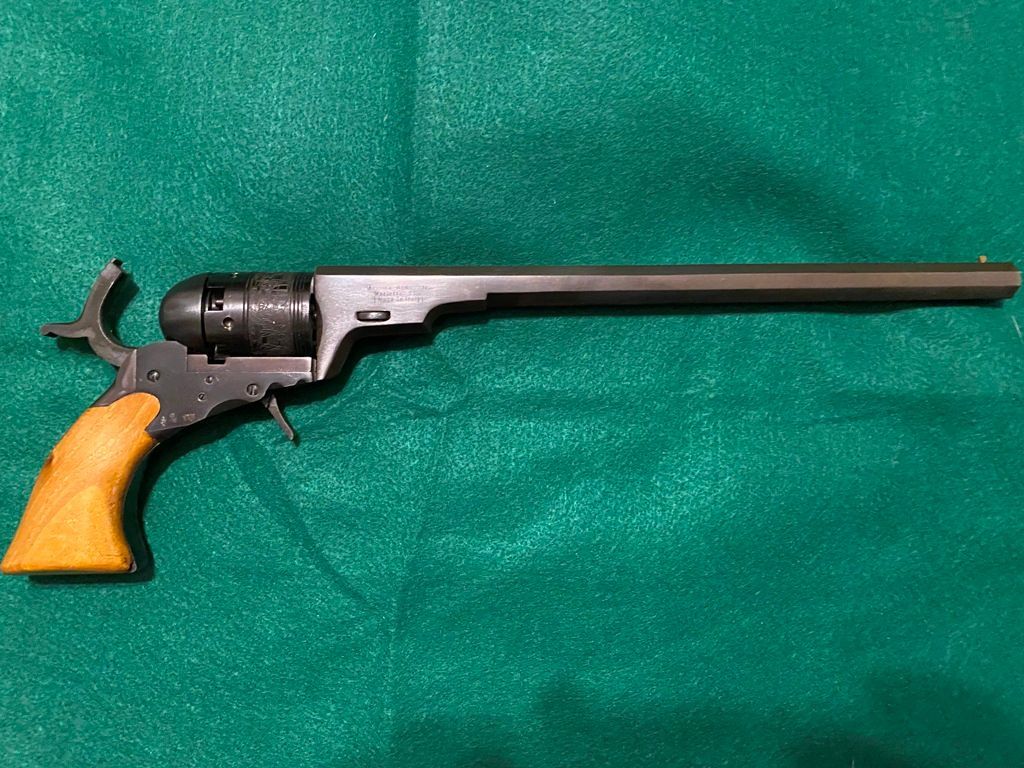
Italian replica percussion revolvers have a tangled, fascinating lineage, and nowhere is that clearer than in the story of the MOFRA‑made Colt Patersons. These revolvers sit right at the beginning of the modern Paterson reproduction era and quietly shaped everything that came after—long before Uberti or Pietta ever offered their own versions.
In this post, I’ll walk through what we know about these early MOFRA Patersons, how to recognize them, and why they matter to collectors and historians.
Origin: MOFRA, Euromanufacture, and Replica Arms
MOFRA (Mainardi Officina Fabrica Replica Armi) was a small Italian firm in the Brescia/Gardone valley that entered the black‑powder replica business in the 1960s. Working in concert with the Mainardi brothers’ distribution company, Euromanufacture (often shortened to EIE and represented by a double‑diamond logo), MOFRA produced some of the very first modern Colt Paterson reproductions for the American market.
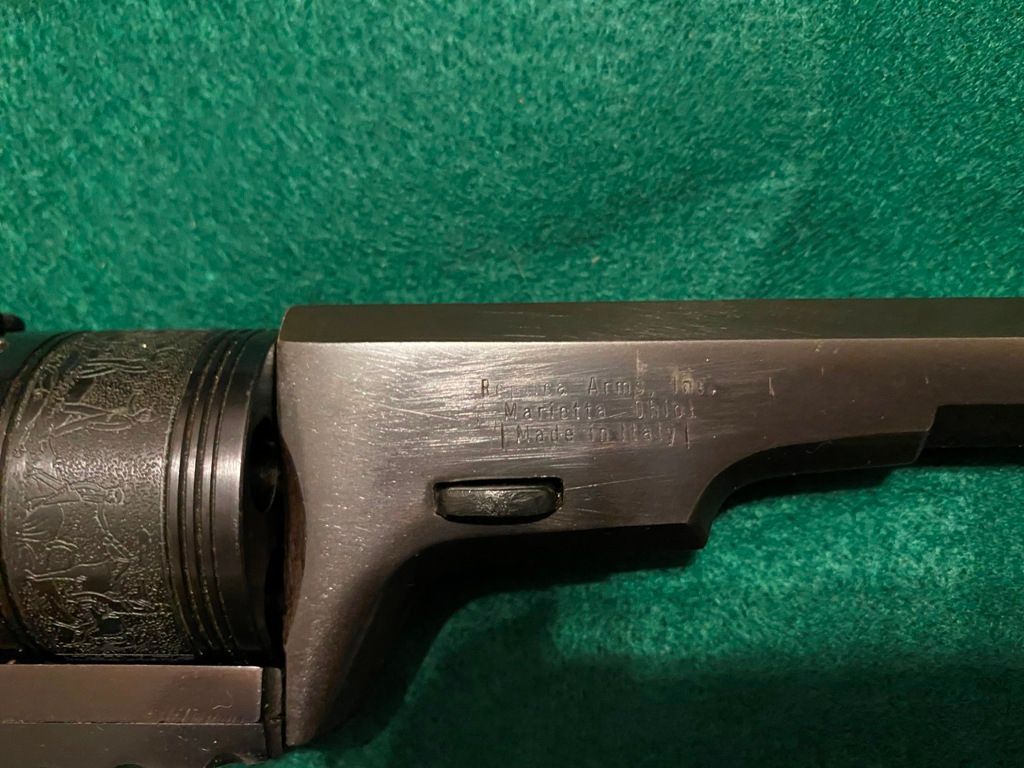
These guns were exported through Replica Arms Inc. of Marietta, Ohio. That three‑way relationship—MOFRA as maker, Euromanufacture as distributor, Replica Arms as U.S. importer—explains the somewhat busy rollmarks and proof clusters you see on genuine MOFRA Patersons.
Dating evidence from Italian proof codes and documented examples places MOFRA Paterson production solidly in the mid‑1960s, with confirmed date codes such as XXII (1966) and later into the decade. That makes them the earliest wide‑distribution Paterson reproductions on the market.
Known features and variants:
· Caliber: predominantly .36, with some later experimental or converted examples reported.
· Barrel lengths: documented examples at 6", 7½", 9", and 12", with the 6" and 12" barrels being markedly scarcer.
· Loading lever: none. These are true to the early Paterson pattern, relying on external loading tools.
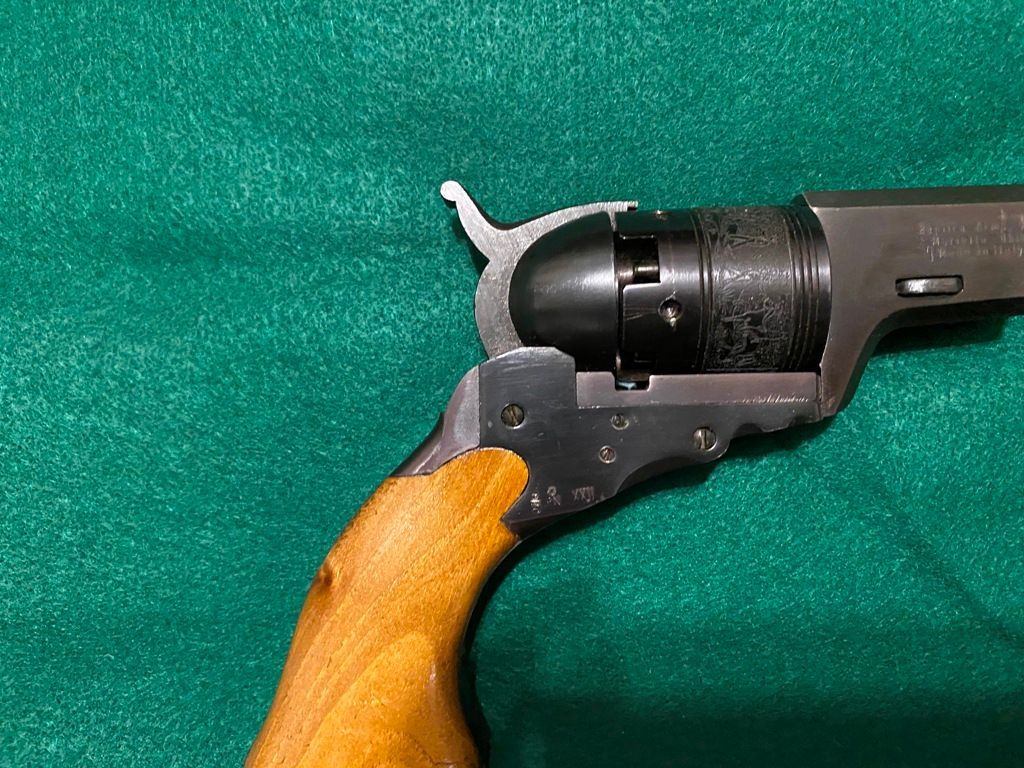
· Cylinder: square‑back profile with an engraved scene, reflecting the 1st Model 1836 style rather than the later No. 5 “Texas” pattern with loading lever.
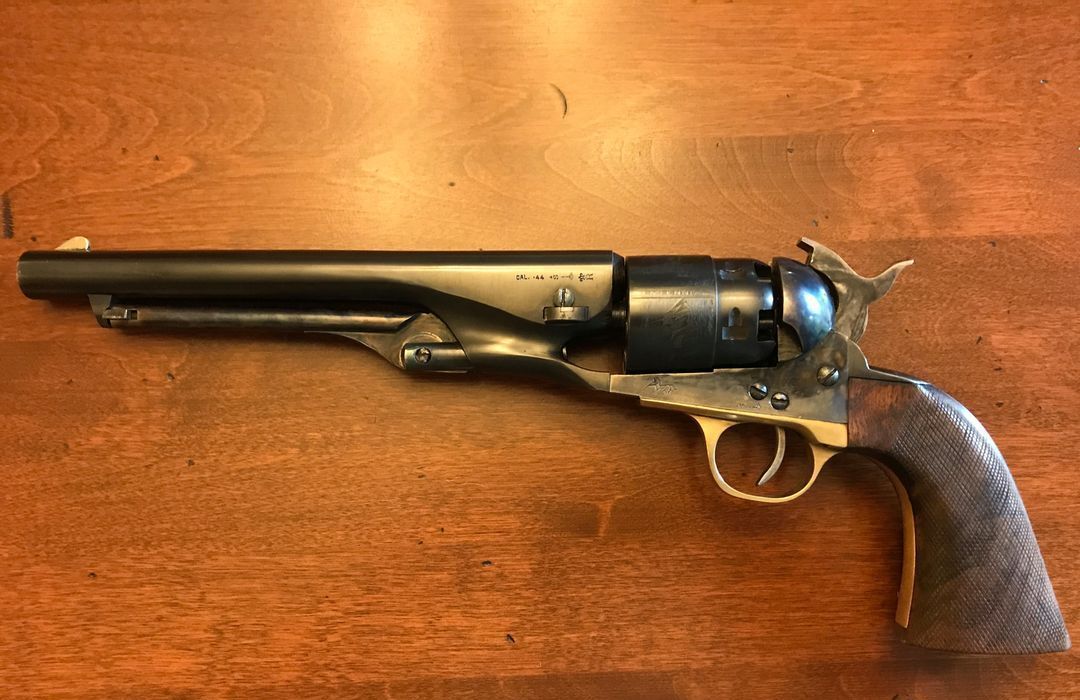
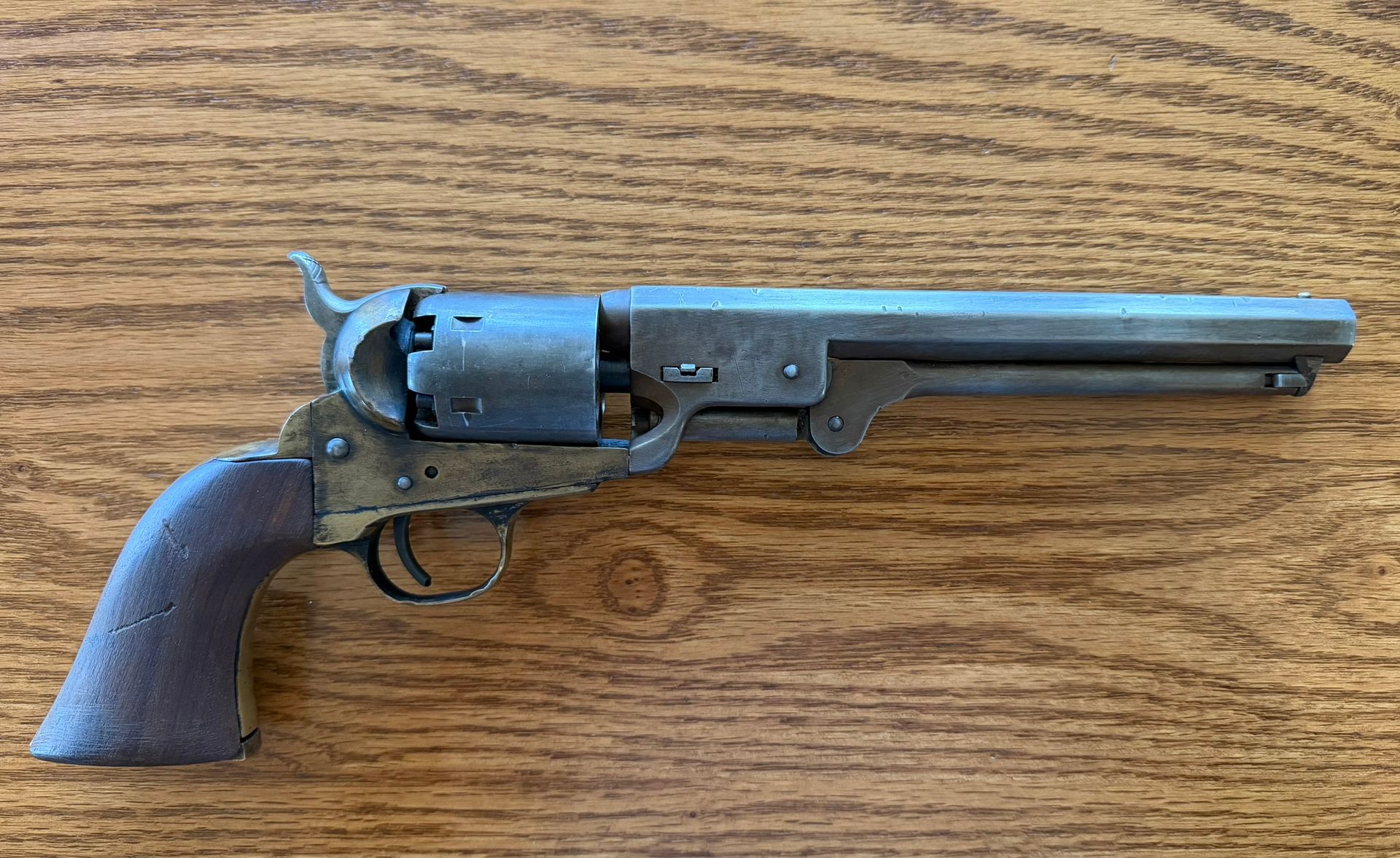
· Construction: typical 1960s Italian carbon‑steel construction with deep bluing and simple, functional wood grips (often in relatively plain beech or similar).
In other words, MOFRA wasn’t copying the later, more familiar loading‑lever Paterson that Uberti would popularize decades later; they were reaching back to the earliest Colt pattern and putting it into small‑batch production.
How to Identify a MOFRA Paterson
Because of subcontracting and the reuse of patterns, it’s easy to mis‑attribute early Italian Patersons. Correct identification rests on the combination of maker marks, import marks, and Italian proofs rather than any single feature.
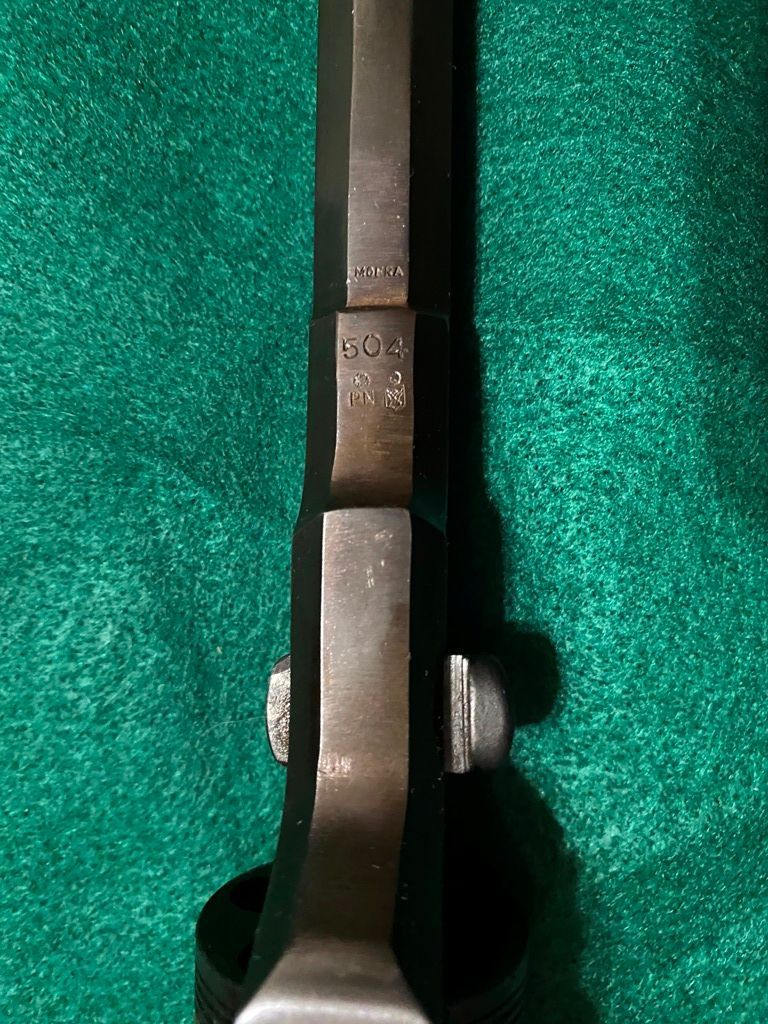
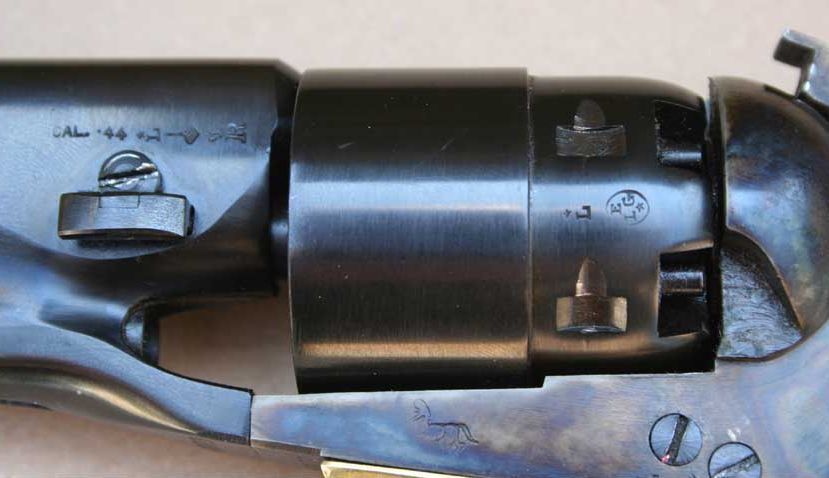
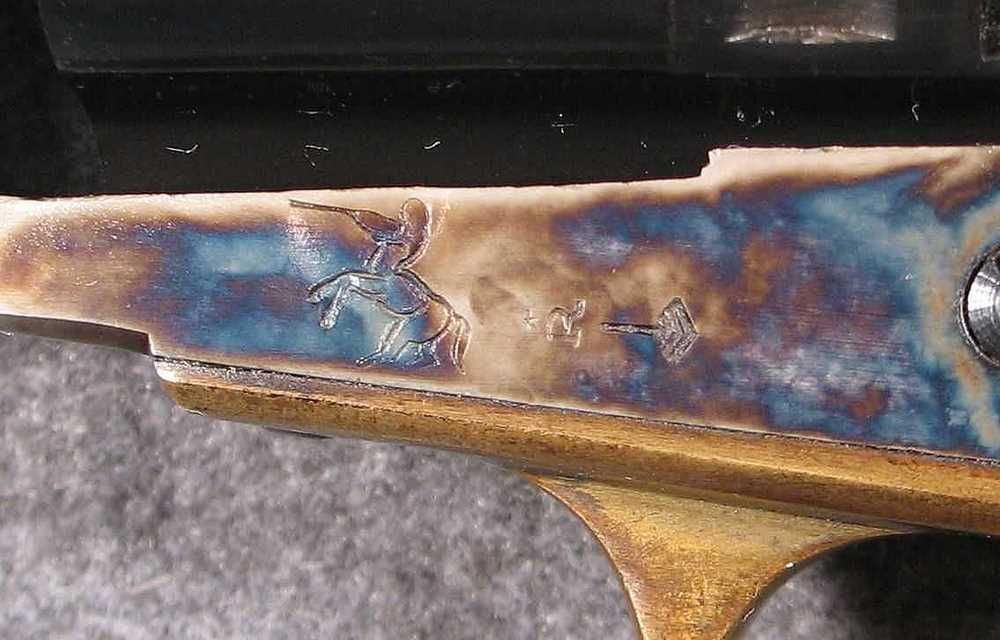
On documented examples, the word “MOFRA” appears in small uppercase letters, typically on a flat surface where it will not interfere with the Replica Arms rollmark. One very clear specimen shows MOFRA stamped on the underside of the barrel flat immediately in front of the frame, above the serial and proof cluster.
That subtle placement is characteristic of small Italian shops of the period: the importer’s name gets the prominent side‑barrel real estate, the maker tucks his mark into a secondary but permanent position.
3. Italian Proofs and Date Codes
MOFRA Patersons bear the usual Gardone/Brescia proof house markings:
· Star‑over‑shield proof.
· “PN” black‑powder proof.
· A Roman‑numeral date code .
For example, a revolver marked “XXII” in a small box is dated to 1966 by the Italian system. That date aligns nicely with what we know about Replica Arms’ catalog offerings in the same period and with other MOFRA‑connected pieces.
These proofs may appear on the frame ahead of the grip, on the barrel flats, or both, alongside the serial number. A complete recorded specimen with serial 504, MOFRA barrel stamp, Replica Arms rollmark, and an XXII date code gives us a firmly anchored point in the production timeline.
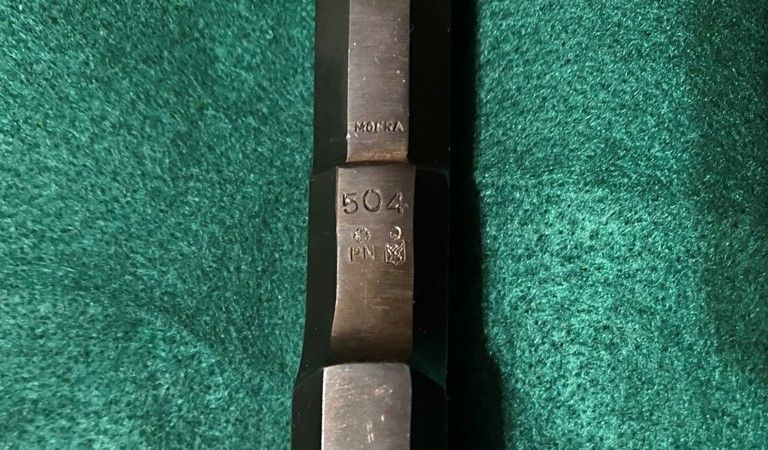
Observed serials on MOFRA Patersons are three‑digit numbers on the underside of the barrel and repeated on the grip frame. With the limited number of documented guns, it’s still unclear whether the sequence was continuous or segmented by barrel length, but the presence of numbers in the low hundreds suggests relatively small production.
While the marks tell us who made it, the mechanical design tells us what MOFRA was trying to emulate.
Key visual and mechanical cues:
· No loading lever. These revolvers are “true” Patersons in the sense that you must remove the barrel and cylinder to load, just as on the earliest Colts.
· Very long, slender octagon barrels. The 12" version in particular creates an exaggerated fencing‑foil silhouette, but even the 7½" and 9" versions look noticeably sleeker than later Uberti designs with loading levers.
· Engraved cylinder scene. The cylinder carries a continuous scene reminiscent of original Patersons, adding an important period flavor even if the engraving style differs slightly from Colt’s.
· Simple, light‑colored grips. Many examples wear uncheckered, lightly finished wood grips, intentional or not giving them the look of “in‑the‑white” replacement stocks on surviving originals.
· Early Italian fit and finish. Expect decent machining but not the later high‑polish Uberti standard; there is often a slightly utilitarian feel that many collectors actually prize for authenticity.
For shooters who have only handled later loading‑lever Paterson reproductions, a MOFRA example feels more archaic and experimental—the way the real Paterson must have felt to 1830s users.
From a historical and collecting standpoint, MOFRA Patersons punch far above their numerical weight.
First Wave of Modern Patersons
MOFRA’s mid‑1960s production predates Uberti’s dedicated Paterson projects by about two decades. These were the first widely imported Paterson‑pattern revolvers that American shooters and collectors could buy new. They reintroduced the design to a generation that had only seen it in books.
A Snapshot of the Gardone Subcontract Network
MOFRA exemplifies the small‑shop manufacturing model in the Gardone/Brescia valley. A modest workshop with a manufacturing license could build complete revolvers or major components, then feed them into a distribution chain (Euromanufacture) that in turn supplied U.S. importers (Replica Arms).
That structure explains why some early guns carry patterns or features that later show up under different brand names; the intellectual “DNA” circulated through a handful of craftsmen, jigs, and fixtures long before company names on boxes stabilized.
Reference Points for Collectors
Because documentation is thin and many guns are mis‑identified, getting solidly documented MOFRA Patersons with clear photos—showing:
· MOFRA barrel mark
· Replica Arms rollmark
· Italian date code
· Serial and proofs
These become reference specimens. They help anchor discussions of:
· How early the Italian Paterson revival really began.
· Which patterns (barrel lengths, cylinder styles) were in circulation by the mid‑1960s.
· How to distinguish MOFRA pieces from later Uberti or Palmetto examples that sometimes confused sellers and auction houses.
A thoroughly photographed revolver like the 1966‑dated, serial‑504 example provides a hard data point future researchers can triangulate from.
Collecting and Using MOFRA Patersons Today
For collectors, MOFRA Patersons sit in a sweet spot:
· Historically important as first‑wave reproductions.
· Scarce enough to be interesting but not so rare as to be unobtainable.
· Mechanically simple and robust enough that careful shooters can still enjoy them with appropriate black‑powder loads.
From a practical standpoint, anyone handling one of these guns should remember:
· Treat it as you would any early‑pattern Paterson: loading off the gun, thoughtful cylinder management, and a healthy respect for the original design’s quirks.
· Because many were shot hard in the 1960s–70s, condition varies widely; crisp proofs and legible MOFRA marks add real premium, not just trivia value.
For historians and writers, they’re a bridge between the obscure, one‑off custom reproductions of the early 20th century and the large‑scale, catalog‑driven replica industry that dominated from the 1970s onward.
Social Media